Mock article: supported Markdown styles for Typenode
A temporary noindex article that previews the Markdown and GFM styles supported by the Typenode blog template.
This temporary mock article is a style gallery. It exists so we can review every visible Markdown feature the blog currently supports before replacing the content with a real article.
The page title above is the only supported h1. Article body content starts at h2 and supports headings through h6.
Heading depth h2
This paragraph includes bold text, italic text, bold italic text, strikethrough text, inline code, a normal link, and a bare autolink: https://typenode.ai.
Line breaks are supported too.
This sentence starts after a hard Markdown line break.
Heading depth h3
Use unordered lists when the order does not matter:
- Capture the current operating process.
- Name the reviewers and owners.
- Keep edge cases visible.
- Nest supporting detail when needed:
- Data access boundary.
- Escalation path.
- Human review point.
Use ordered lists when sequence matters:
- Draft the workflow.
- Review the assumptions.
- Ship the first version.
- Measure and improve it.
Heading depth h4
GitHub-flavored task lists are supported:
- Add the blog route.
- Keep mock content out of indexable surfaces.
- Replace this style gallery with the real first article.
Blockquotes are supported:
Governed AI workflows should be legible enough for operators, reviewers, and technical owners to reason about the same artifact.
Heading depth h5
Tables are supported through GitHub-flavored Markdown:
| Element | Markdown example | Rendered purpose |
|---|---|---|
| Strong | **important** |
Emphasized importance |
| Inline code | `workflow.run()` |
Technical token |
| Strike | ~~removed~~ |
Deprecated or removed content |
Code fences are supported:
type ReviewState = "draft" | "approved" | "needs-work";

export function canPublish(state: ReviewState) {
  return state === "approved";
}
Heading depth h6
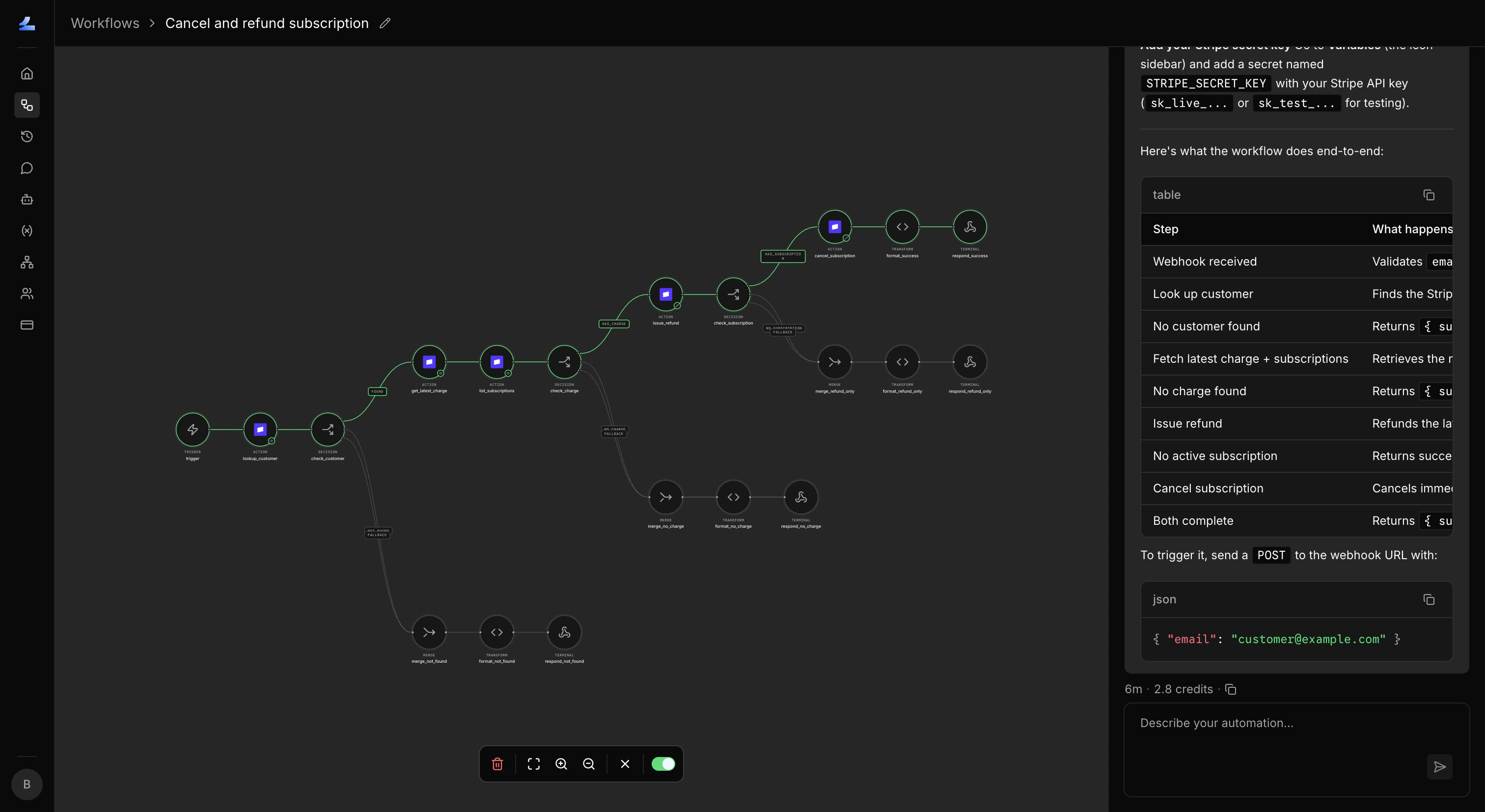
Images are supported when the source is available:
Horizontal rules are supported:
Footnotes are supported for editorial asides.1
Footnotes
-
Use footnotes sparingly. They are useful for extra context that should not interrupt the main article flow. ↩